VNS Treatment for Depression: What You Need to Know
Depression affects millions of Americans, yet for some individuals, traditional treatments like medication and psychotherapy don't provide adequate relief. When multiple antidepressants and therapy approaches fail to produce meaningful improvement, patients may face what clinicians call treatment-resistant depression. For these cases, vagus nerve stimulation (VNS) has emerged as an FDA-approved intervention that offers new possibilities. Understanding how vns treatment for depression works, who might benefit, and what the latest research reveals can help patients and their care teams make informed decisions about this neuromodulation approach.
What Is Vagus Nerve Stimulation
Vagus nerve stimulation is a medical treatment that uses electrical impulses to affect brain function through the vagus nerve, a major pathway connecting the brain to the body's organs. The vagus nerve runs from the brainstem through the neck and into the chest and abdomen, carrying signals in both directions. When used for depression, VNS involves surgically implanting a small device similar to a pacemaker under the skin in the chest area.
This device connects to a lead wire that wraps around the left vagus nerve in the neck. Once activated, the generator sends regular, mild electrical pulses to the vagus nerve. These signals travel upward to brain regions involved in mood regulation, including the limbic system, thalamus, and cerebral cortex. The FDA approval for VNS in treatment-resistant depression came in 2005, recognizing its potential role after other interventions have proven insufficient.
The Science Behind VNS Mechanisms
Research into VNS treatment for depression has revealed multiple biological pathways through which electrical stimulation may improve symptoms. According to studies examining the mechanisms of action of VNS, the treatment appears to modulate neurotransmitter systems critical to mood regulation. Specifically, VNS affects serotonin, norepinephrine, dopamine, and GABA levels in brain regions associated with depression.
The electrical impulses trigger changes in neural plasticity, potentially helping the brain form new, healthier patterns of activity. Brain imaging studies have shown that VNS can increase blood flow and metabolic activity in areas that typically show reduced function in depression. These neurobiological changes don't happen immediately-the therapeutic effects of VNS typically develop gradually over weeks to months.
Key neurobiological effects include:
Increased release of norepinephrine from the locus coeruleus
Enhanced serotonergic transmission in limbic structures
Modulation of the hypothalamic-pituitary-adrenal stress axis
Changes in brain-derived neurotrophic factor (BDNF) expression
Altered functional connectivity between mood-regulating networks
Who Qualifies for VNS Treatment
Not everyone with depression is a candidate for vns treatment for depression. The FDA approval specifically targets treatment-resistant depression in adults who have failed to respond adequately to at least four different antidepressant medications. Clinical guidelines typically require that patients have tried multiple classes of antidepressants, augmentation strategies, and evidence-based psychotherapy before considering VNS.
The evaluation process involves comprehensive psychiatric assessment to confirm the diagnosis of major depressive disorder and document the treatment history. Candidates must be experiencing chronic or recurrent depression, not a first episode. Medical evaluations rule out conditions that might make surgery risky or interfere with device function.
Qualification Criteria | Requirements |
Depression severity | Chronic or recurrent major depressive disorder |
Treatment history | Failed 4+ antidepressant trials from different classes |
Psychotherapy | Adequate trial of evidence-based therapy |
Medical status | Able to undergo surgical implantation safely |
Age | Adults 18 years and older |
Medicare coverage for VNS follows specific protocols outlined in CMS coverage policies, requiring participation in approved registries or clinical studies. Private insurance coverage varies significantly, and many patients face challenges with reimbursement despite FDA approval. Those exploring intensive depression treatment options should discuss coverage thoroughly with their providers and insurers before proceeding.
The Implantation Procedure
The surgical implantation of a VNS device is typically performed as an outpatient procedure under general anesthesia, lasting approximately one to two hours. A surgeon makes two small incisions: one in the upper left chest to create a pocket for the pulse generator, and another in the neck to access the vagus nerve. The lead wire connects the generator to the nerve, and both incisions are closed with sutures.
Most patients go home the same day or after an overnight observation. Recovery from the surgery itself usually takes a few weeks, during which activity restrictions apply. The device is typically programmed and activated two to four weeks after implantation, allowing surgical sites to heal first. Initial settings are conservative, with gradual adjustments made during follow-up appointments to optimize therapeutic effect while minimizing side effects.
For individuals navigating complex treatment decisions like VNS, working with experienced mental health professionals can provide essential guidance and support throughout the process. Book a free consultation today to connect with a therapist who understands treatment-resistant depression and can help you evaluate all available options, including traditional therapies that should remain part of any comprehensive treatment approach.
Clinical Evidence and Effectiveness
The evidence base for vns treatment for depression includes both controlled trials and long-term observational studies. A recent randomized, sham-controlled trial examined VNS in patients with marked treatment-resistant depression over twelve months. Results from these rigorous studies help clarify what patients can realistically expect from this intervention.
Response rates to VNS vary considerably across studies, partly due to differences in patient populations and study designs. In long-term observational studies extending five years or more, approximately 30-40% of patients show significant clinical improvement. These response rates, while modest, represent meaningful change for individuals who had exhausted other treatment options.
Timeline of Therapeutic Effects
Unlike medications that may show effects within weeks, VNS treatment for depression typically requires patience. Initial improvements often appear after three to six months of stimulation, with continued gains possible over one to two years. This delayed response pattern differs markedly from other depression treatments and requires sustained commitment from patients and providers.
Typical VNS response timeline:
Weeks 1-4: Device implantation and healing, no stimulation yet
Months 1-3: Device activated and adjusted, minimal symptom change expected
Months 3-6: Early responders begin showing improvement in mood and function
Months 6-12: Continued symptom reduction, optimization of stimulation parameters
Years 1-2: Further improvements possible, stable response maintenance
Research comparing VNS to other neuromodulation approaches, including analysis from network meta-analyses of brain stimulation methods, helps contextualize where VNS fits among available options. Each intervention has distinct characteristics regarding invasiveness, evidence strength, cost, and practical considerations.
Side Effects and Safety Considerations
Understanding potential side effects is crucial when evaluating vns treatment for depression. Most adverse effects are mild to moderate and tend to decrease over time as patients adjust to stimulation. Voice alteration or hoarseness is the most common side effect, occurring in approximately 50-60% of patients during active stimulation pulses. This happens because the vagus nerve also innervates the vocal cords.
Other frequent side effects include shortness of breath, cough, tingling sensations in the neck, and increased throat clearing. These typically occur during the brief stimulation periods (typically 30 seconds every five minutes) and resolve between pulses. Adjusting stimulation parameters can often reduce bothersome effects while maintaining therapeutic benefit.
Side Effect | Frequency | Management |
Voice alteration | 50-60% | Parameter adjustment, usually decreases over time |
Shortness of breath | 15-20% | Stimulation timing modifications |
Cough | 10-15% | Often transient, responds to parameter changes |
Neck pain | 10-15% | Typically resolves after initial adjustment period |
Headache | 5-10% | Standard headache management, parameter review |
Serious surgical complications are rare but can include infection at the incision site, device malfunction requiring replacement, or nerve damage. The device battery typically lasts five to eight years before requiring surgical replacement. Patients with VNS devices can generally undergo MRI scans with specific safety protocols, though certain restrictions apply.
Alternative and Complementary Approaches
While VNS represents one option for treatment-resistant depression, it exists within a broader landscape of interventions. Many individuals benefit from combining VNS with ongoing psychotherapy and medication management rather than viewing it as a standalone solution. Evidence-based therapy online services remain accessible even for patients with chronic, difficult-to-treat depression.
Non-Invasive Neuromodulation Options
Transcutaneous auricular vagus nerve stimulation (taVNS) offers a non-invasive alternative to implanted VNS. According to a comprehensive review of taVNS for major depressive disorder, this approach uses external electrodes placed on the ear to stimulate vagus nerve branches without surgery. While promising, taVNS evidence remains preliminary compared to implanted VNS, and it hasn't yet achieved FDA approval for depression treatment.
Other neuromodulation approaches for treatment-resistant depression include:
Electroconvulsive therapy (ECT): The most established intervention for severe, treatment-resistant depression with the strongest evidence base
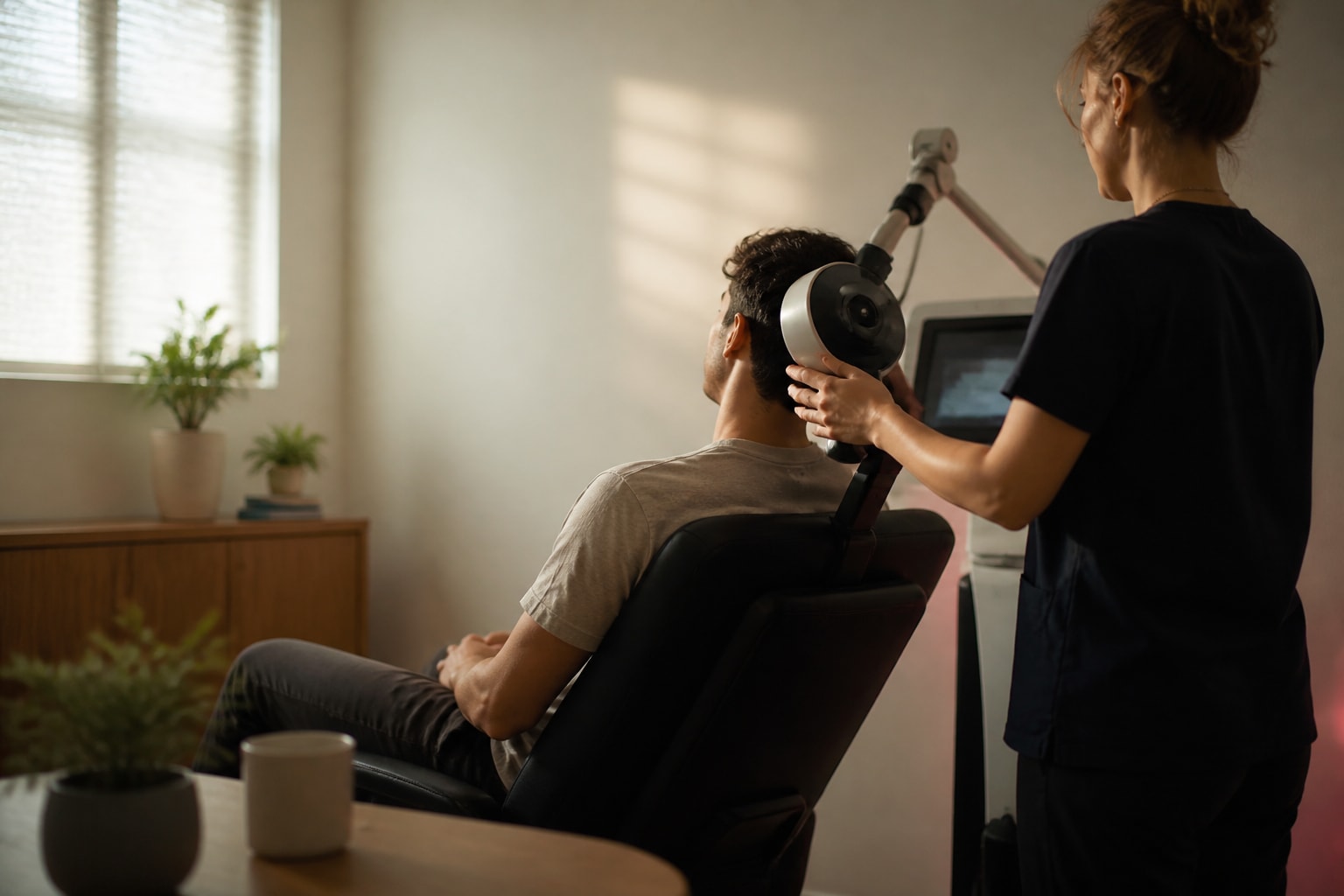
Transcranial magnetic stimulation (TMS): Non-invasive brain stimulation with FDA approval and growing evidence
Deep brain stimulation (DBS): Investigational approach involving electrode implantation directly in brain structures
Ketamine and esketamine: Rapidly acting pharmacological approaches for treatment-resistant depression
International guidelines, such as the NICE depression guidance, provide frameworks for sequencing these interventions alongside conventional treatments. The choice among options depends on individual patient factors, availability, cost considerations, and patient preferences.
Integrating VNS with Ongoing Mental Health Care
VNS treatment for depression works best within a comprehensive care framework that addresses multiple aspects of mental health. Even after device implantation, continued psychotherapy helps patients develop coping strategies, address underlying issues, and maximize functional improvement. Medication management typically continues, as VNS is designed to augment rather than replace other interventions.
Regular monitoring by mental health professionals tracks symptom changes, adjusts treatment plans, and provides support during the extended period before VNS effects become apparent. For patients in California seeking such coordinated care, resources at CopeHouse Collective offer experienced therapists familiar with treatment-resistant depression and complex treatment planning.
Lifestyle and Self-Management Strategies
Supporting VNS treatment with lifestyle modifications enhances overall mental health outcomes. These foundational practices benefit depression regardless of specific medical interventions:
Sleep hygiene: Maintaining consistent sleep schedules and addressing insomnia
Physical activity: Regular exercise has well-established antidepressant effects
Nutrition: A balanced diet supports both physical and mental health
Stress management: Techniques like mindfulness reduce stress burden
Social connection: Maintaining relationships combats isolation
Patients exploring holistic treatment for depression often find that integrating multiple approaches-biological, psychological, and social-yields the best outcomes. VNS addresses neurobiological aspects but doesn't replace the human connection and skill-building that psychotherapy provides.
Future Directions and Research
The field of VNS treatment for depression continues evolving as researchers refine techniques, identify optimal patient populations, and develop improved devices. Closed-loop systems that adjust stimulation based on real-time physiological feedback represent one promising direction. These adaptive devices could potentially deliver more personalized therapy with better outcomes and fewer side effects.
Predictive biomarkers to identify which patients will respond to VNS before implantation would significantly improve patient selection. Current research examines brain imaging patterns, genetic markers, and clinical characteristics that might forecast response. Better prediction tools would spare non-responders from unnecessary surgery while directing appropriate candidates toward this intervention earlier.
Miniaturization of devices and less invasive surgical techniques may reduce barriers to VNS adoption. Researchers are also investigating optimal stimulation parameters, with some evidence suggesting that individualized programming based on patient characteristics might enhance effectiveness beyond current standard protocols.
VNS treatment for depression represents a valuable option for individuals with treatment-resistant depression who haven't found relief through conventional approaches, though it requires realistic expectations about timeline, response rates, and ongoing care needs. While VNS addresses neurobiological aspects of depression through direct brain stimulation, comprehensive treatment continues to benefit from integrated psychotherapy, medication management, and lifestyle approaches. Whether you're exploring advanced interventions like VNS or seeking support for depression treatment of any kind, the experienced therapists at CopeHouse Collective provide compassionate, evidence-based care tailored to your unique situation-reach out today to start your journey toward better mental health.


Comments