Home Treatment for Anxiety and Depression: A Practical Guide
The most effective home treatment for anxiety and depression combines a few evidence-based habits: scheduled activity, regular exercise, consistent sleep, grounding and breathing techniques, and structured self-help based on cognitive behavioral therapy. These steps work best for mild to moderate symptoms, and they work better still when paired with guidance from a licensed clinician. This guide explains what to do at home, how to build it into daily life, and how to tell when home care is no longer enough.
What Home Treatment Can and Cannot Do
Home-based care can reduce the intensity of anxiety and depression, but it is a complement to professional treatment and not a replacement for it when symptoms are severe or persistent.
The World Health Organization describes a depressive episode as depressed mood or loss of interest for most of the day, nearly every day, for at least two weeks. If that description fits your experience, the strategies below are a reasonable starting point, and a conversation with a clinician is a sensible parallel step.
Home treatment is most useful when:
Symptoms are mild to moderate and not interfering with safety.
You want skills you can use between therapy sessions.
You are waiting for an appointment and need something concrete to do now.
It is not enough on its own if you are having thoughts of harming yourself, cannot meet basic daily needs, or have gone several weeks without improvement. In the United States, you can call or text 988 at any time to reach the Suicide and Crisis Lifeline.
Start With Behavioral Activation
Behavioral activation is the practice of scheduling meaningful, manageable activities even when motivation is low, and it is one of the most reliable tools for depression. The WHO lists behavioral activation, cognitive behavioral therapy, interpersonal psychotherapy and problem-solving therapy among the effective psychological treatments for depression, and notes they can be accessed through self-help manuals, websites and apps.
The logic is simple. Depression lowers energy, so people withdraw. Withdrawal removes the experiences that improve mood, which deepens the low energy. Behavioral activation interrupts that loop by acting first and waiting for motivation second.
How to Set It Up
List activities in three groups: pleasure (a favorite show, music), mastery (laundry, a work task) and connection (a text to a friend).
Shrink each one. "Clean the house" becomes "clear the kitchen counter for ten minutes."
Schedule them by day and time, the same way you would schedule an appointment.
Rate your mood before and after on a 0 to 10 scale for a week. The pattern often shows which activities help most.
Small and consistent beats large and occasional. Two ten-minute activities every day will do more than one ambitious afternoon followed by exhaustion.
Move Your Body on a Schedule
Regular aerobic exercise is a well-supported part of home treatment for anxiety and depression, and it does not require a gym. The NHS advises that adults aim for at least 150 minutes of exercise a week, which breaks down to about 30 minutes on five days.
NICE, the UK's clinical guidance body, describes a group exercise programme for depression as usually involving more than one session per week for 10 weeks with moderate-intensity aerobic activity. That gives you a useful template: a repeating structure over about ten weeks, not a single burst of effort.
Practical options for home:
Brisk walking, ideally outdoors in daylight.
Following a beginner video for cardio, yoga or strength work.
Cycling, dancing or stair climbing in short blocks.
If 30 minutes feels impossible, start with five. Exercise also burns off the physical tension that anxiety produces, so a short walk can help during a spike as well as over the long term.
Protect Your Sleep
Consistent sleep is one of the highest-return habits for both conditions because poor sleep worsens mood and heightens anxiety. The NHS notes that adults need around 7 to 8 hours of sleep on average.
Steps that tend to help:
Keep a fixed wake time every day, including weekends. This anchors your body clock more than a fixed bedtime does.
Stop caffeine by early afternoon and limit alcohol, which fragments sleep.
Dim lights and put screens away for the last 30 to 60 minutes of the evening.
If you cannot sleep after roughly 20 minutes, leave the bed, do something quiet in low light, and return when drowsy.
Morning light also matters. Getting outside soon after waking supports your sleep-wake rhythm, and people whose low mood worsens in darker months may want to read about light therapy for anxiety and depression.
Use Grounding and Breathing for Anxiety in the Moment
Grounding and slow breathing calm the body's alarm response within minutes, which makes them the best tools for acute anxiety at home. They do not remove the cause of anxiety, but they reduce the physical intensity enough to think clearly.
A Simple Grounding Sequence
Name five things you can see, four you can touch, three you can hear, two you can smell and one you can taste. This pulls attention from worry about the future into the present.
Extended-Exhale Breathing
Breathe in through your nose for four counts and out slowly through your mouth for eight. Repeat for two to five minutes. A longer exhale than inhale engages the body's calming response. If counting makes you anxious, simply make each exhale a little slower than the inhale.
Muscle Release
Tense and release muscle groups from your feet upward, holding each for five seconds. People who carry anxiety in the jaw, shoulders or stomach often find this the most noticeable of the three.
What Does It Mean to Feel Anxious About Being Anxious?
Feeling anxious about being anxious means you notice the physical or mental signs of anxiety and then become afraid of them, which feeds the original sensation. A racing heart triggers the thought "something is wrong," which raises the heart rate further.
This secondary layer is common, and it responds to a specific shift in approach: instead of fighting the feeling, observe it. Try saying, "This is anxiety. It is uncomfortable, and it will pass." Metacognitive approaches target exactly this pattern of worrying about worry, and you can read more in this overview of metacognitive therapy for anxiety and depression.
A few habits make the loop weaker:
Label sensations factually ("my chest is tight") without predicting outcomes.
Postpone worry to a 15-minute scheduled window later in the day.
Stop checking, scanning and reassurance-seeking, which keep the fear alive.
Try Structured Self-Help Based on CBT
Structured self-help gives you the core techniques of cognitive behavioral therapy in workbook, website or app form, and guidance suggests it is a sensible first step for many people with less severe depression. NICE says that for a new episode of less severe depression, guided self-help should be considered first for most people, while matching treatment to the person's needs and preferences.
The word "guided" matters. NICE describes guided self-help as structured CBT, behavioral activation, problem-solving or psychoeducation materials, with a trained practitioner supporting progress, usually across 6 to 8 regular sessions. Working through materials alone can help, but having someone review your progress and adjust the plan is part of what makes the format effective.
Core skills you can practice:
Thought records: write the situation, the automatic thought, the evidence for and against it, and a more balanced alternative.
Problem-solving: define one problem, list options, pick one, try it, and review.
Gradual exposure: approach avoided situations in small steps instead of avoiding them entirely.
Build Connection and Reduce Stress Load
Social contact and lower baseline stress both reduce symptoms, and they are the areas most often neglected when someone is struggling. Isolation tends to intensify depression, while unrelenting stress keeps anxiety elevated.
Staying Connected
Aim for one small contact per day: a text, a short call, a shared walk. You do not need to explain everything. For couples and families, strained communication is often both a cause and a consequence of low mood. A brief daily check-in where each person speaks for two uninterrupted minutes can ease tension without requiring a long conversation.
How to Stop Chronic Stress
Chronic stress eases when you reduce what you can control and build recovery time around what you cannot. Practical steps include:
Identify your top two recurring stressors and write one small change for each.
Protect one fixed break in the workday, even ten minutes away from a screen.
Say no to one non-essential commitment this week.
Add a daily wind-down ritual that signals the end of work.
These changes are modest on purpose. Chronic stress rarely resolves through a single dramatic fix, and steady adjustments are easier to maintain.
Supplements, Herbs and Natural Remedies: Proceed Carefully
Herbal and natural remedies have mixed evidence, and some interact with medications, so they belong in a conversation with a prescriber before you try them. Popular options include chamomile, lavender, ashwagandha and valerian, but quality and dosing vary widely between products.
Foundations such as exercise, sleep and structured therapy have stronger support than most supplements. If you are curious about the topic, these overviews of herbal treatment for anxiety and depression and natural treatment for anxiety and depression cover what is known. If you take antidepressants or other prescriptions, check with your doctor first.
Know When Home Treatment Is Not Enough
Seek professional care if symptoms last two weeks or longer, interfere with work or relationships, or include any thoughts of self-harm. Home strategies are a foundation, and a clinician can tailor treatment to your history, including trauma, identity-related stress or relationship strain.
Consider reaching out sooner if:
You have tried consistent home strategies for several weeks without improvement.
Panic attacks, avoidance or low mood are shrinking your daily life.
Past trauma resurfaces when you try to relax or slow down.
Conflict with a partner or family member keeps escalating.
On medication timelines, NICE says antidepressant benefits should generally be felt within four weeks, and it recommends a review usually within two weeks for SSRIs, or within one week for people aged 18 to 25 or when suicide risk is a particular concern. If a prescriber is involved, those check-ins are worth keeping.
Therapy From Home
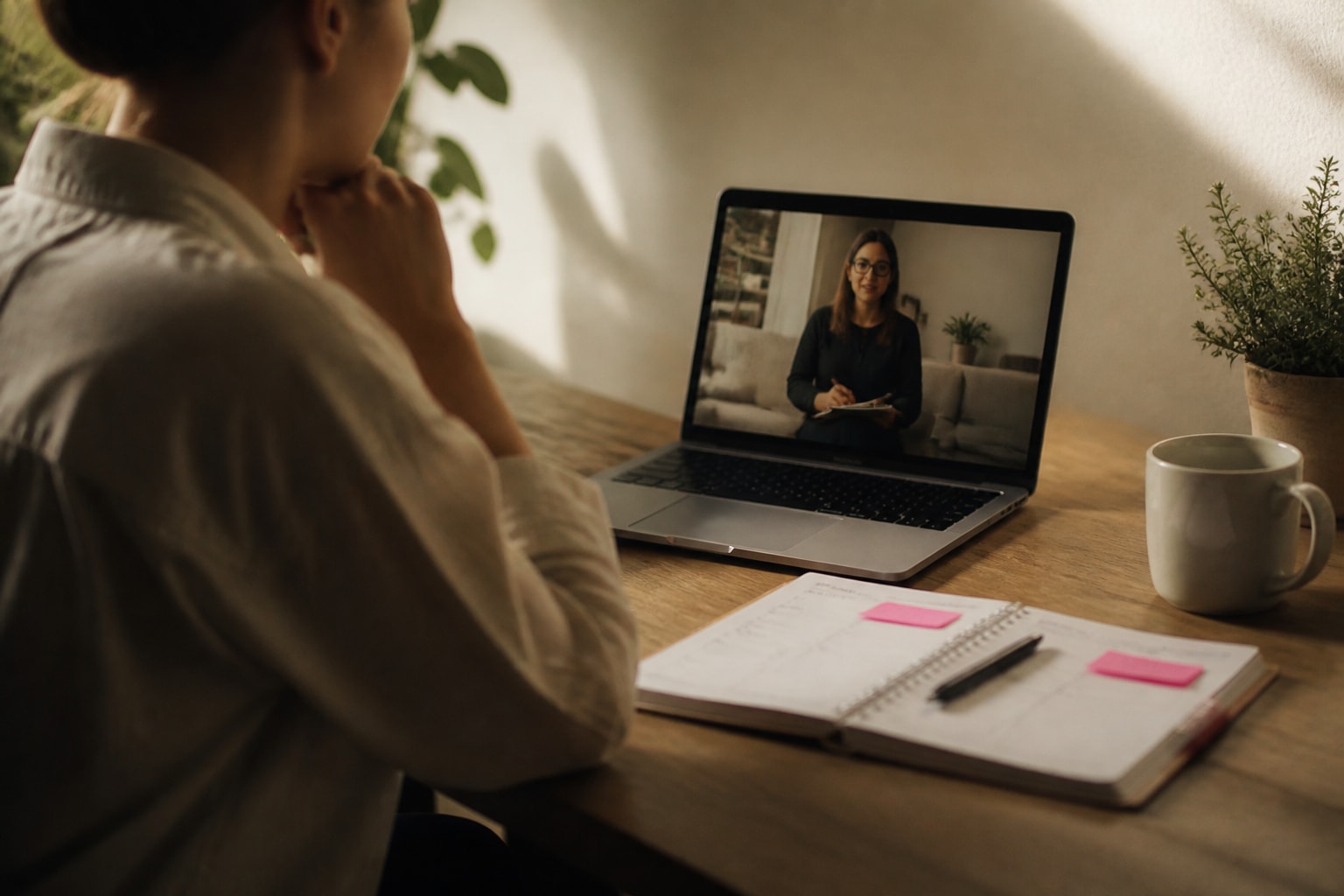
Online psychotherapy brings professional treatment into the same space where you practice your daily skills. For California adults, couples and families, CopeHouse Collective offers a free consultation where you can select one or more therapists and see whether they are in network with your insurance. The practice also provides sliding-scale services.
If you want to compare other routes before deciding, a guide to things that help depression and anxiety offers additional ideas to discuss with a clinician.
FAQ
What is the most effective treatment for anxiety?
Cognitive behavioral therapy is among the best-supported treatments for anxiety, and some people also benefit from medication prescribed by a physician. The right choice depends on symptom severity, history and personal preference, so a clinician can help you decide.
What are the symptoms of work anxiety?
Work anxiety often appears as dread before shifts, difficulty concentrating, irritability, trouble sleeping, and physical signs such as a racing heart, stomach discomfort or muscle tension. Some people also procrastinate, over-prepare or avoid meetings and calls. If these patterns persist and affect your performance or health, speaking with a therapist is a reasonable next step.
How long does it take for home strategies to work?
Some techniques, such as extended-exhale breathing, help within minutes, while habits like exercise, sleep regularity and behavioral activation usually show effects over several weeks. Tracking your mood weekly makes gradual progress easier to see.

Comments