Sun Therapy Light: Benefits and Use for Mental Health
When the days grow shorter and sunlight becomes scarce, many people experience changes in mood, energy, and sleep patterns. A sun therapy light offers a practical solution for those struggling with seasonal mood shifts, disrupted circadian rhythms, or insufficient natural light exposure. These devices simulate the wavelengths and intensity of natural daylight, triggering biological responses that regulate mood, alertness, and overall mental wellness. For anyone seeking support for seasonal affective disorder or general mood enhancement, understanding how sun therapy light works can open new pathways to feeling better during darker months.
Understanding Sun Therapy Light and Its Mechanisms
A sun therapy light, often called a light therapy box or bright light therapy device, delivers specific wavelengths of visible light at controlled intensities. These devices typically emit 10,000 lux of white light, approximately 20 times brighter than standard indoor lighting. The therapeutic effect occurs through non-visual photoreceptor pathways in the eye, particularly through specialized retinal ganglion cells containing melanopsin.
When light enters the eye, it reaches these intrinsic photosensitive retinal ganglion cells (ipRGCs), which communicate directly with the brain's master circadian clock, the suprachiasmatic nucleus. This biological mechanism influences cognition and mood regulation through pathways that affect serotonin production, cortisol rhythms, and melatonin suppression. The process explains why exposure to a sun therapy light can shift circadian timing, improve alertness, and elevate mood even when natural sunlight is unavailable.
Different Types of Light Therapy Devices
The market offers several categories of sun therapy light devices, each designed for specific applications:
Bright white light boxes: Standard 10,000 lux devices for seasonal affective disorder and circadian regulation
Blue-enriched light devices: Compact units emphasizing shorter wavelengths for alertness and circadian phase shifting
Dawn simulators: Gradual sunrise mimicking devices for natural wake signals
Red and near-infrared devices: Photobiomodulation tools for skin health and potential systemic effects
Full-spectrum lamps: Broader wavelength coverage approaching natural sunlight composition
Each type addresses different needs. Traditional bright white light boxes remain the gold standard for seasonal affective disorder treatment, while blue-enriched models offer portability for travelers or office workers. Understanding these distinctions helps individuals select the appropriate sun therapy light for their specific mental health goals.
Clinical Applications for Mental Health
The most established use of a sun therapy light addresses seasonal affective disorder, a form of depression that follows a seasonal pattern, typically worsening during fall and winter. Research demonstrates that bright light therapy effectively reduces SAD symptoms in many patients, with response rates comparable to antidepressant medications for seasonal depression.
Light therapy for anxiety and depression extends beyond seasonal patterns. Non-seasonal depression may also respond to structured light exposure, particularly when combined with psychotherapy and other treatment modalities. Studies show promise for subsyndromal seasonal symptoms, bipolar depression (with careful monitoring), and circadian rhythm sleep disorders.
Evidence-Based Benefits
Condition | Evidence Level | Typical Benefit |
Seasonal Affective Disorder | Strong | 50-80% symptom reduction |
Non-seasonal depression | Moderate | Adjunctive improvement |
Circadian sleep disorders | Strong | Phase shift, improved sleep timing |
Bipolar depression | Limited/Cautious | Potential mood lift with monitoring |
Premenstrual dysphoric disorder | Emerging | Reduced mood symptoms |
The National Institute of Mental Health recognizes light therapy as a first-line treatment option for seasonal affective disorder. A recent network meta-analysis of visible light interventions found that bright white light at 10,000 lux for 30 minutes daily showed the most consistent efficacy across studies, though individual responses vary considerably.
Practical Guidelines for Safe and Effective Use
Maximizing the benefits of a sun therapy light requires attention to timing, duration, distance, and consistency. Morning use typically produces the best results for most people, as it aligns with the body's natural cortisol awakening response and helps establish a healthy circadian rhythm.
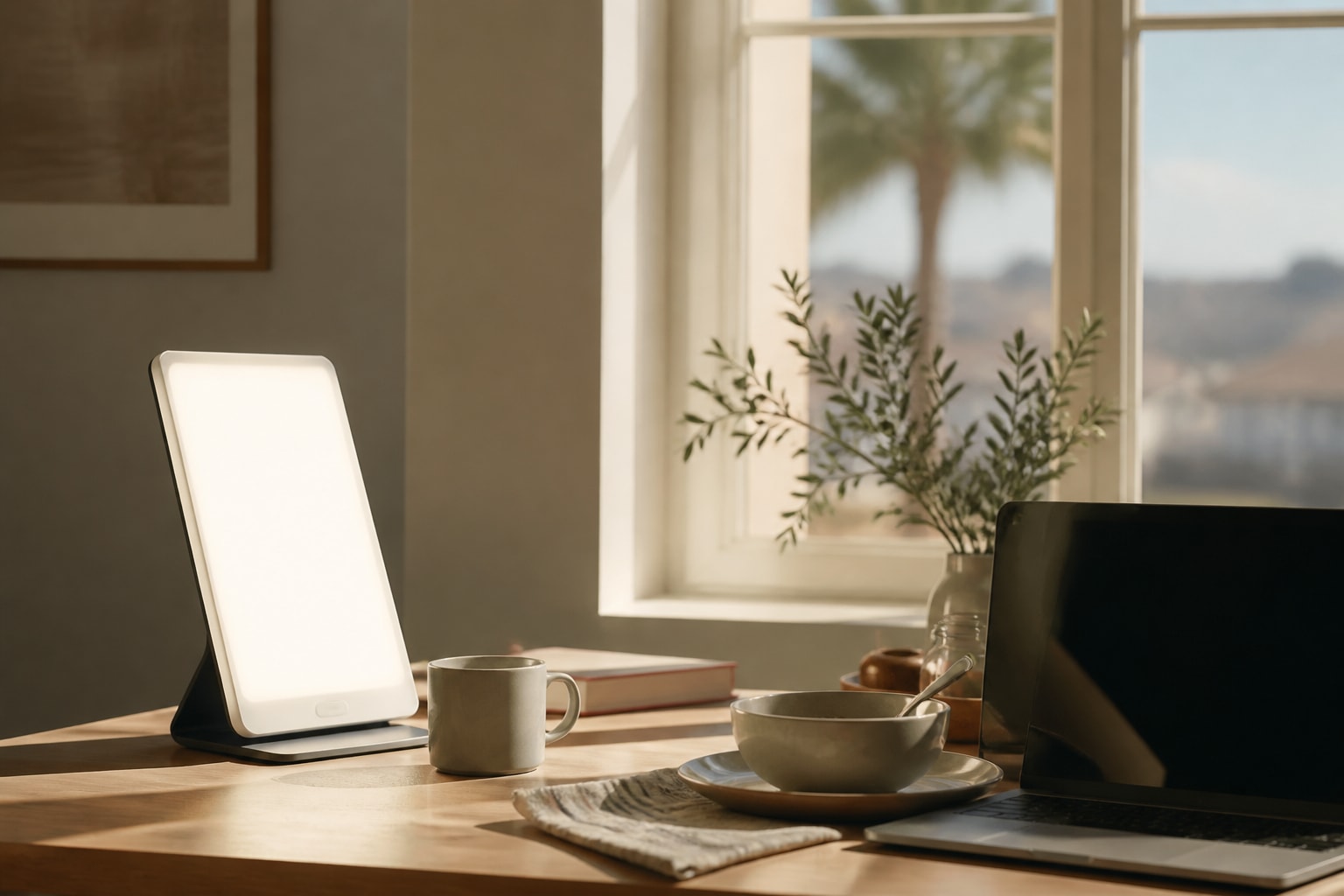
Position the device at eye level, approximately 16 to 24 inches from your face, with the light angled slightly downward. The light should enter your visual field indirectly rather than through direct staring. Most users benefit from 20 to 30 minutes of exposure daily, though some may need up to 60 minutes depending on individual sensitivity and device specifications.
Recommended Usage Protocol
Start in early fall: Begin before symptoms worsen for seasonal patterns
Choose consistent timing: Same time each morning for circadian entrainment
Position correctly: Eye-level placement, indirect viewing angle
Maintain appropriate distance: Follow manufacturer specifications (typically 16-24 inches)
Track your response: Monitor mood, sleep quality, and energy levels
Adjust as needed: Modify duration or timing based on individual response
Continue through season: Maintain use until natural daylight increases
Some individuals experience mild side effects, including headache, eyestrain, nausea, or agitation. These typically resolve within a few days or can be managed by reducing session duration, increasing distance from the device, or shifting usage to later in the day. Anyone with bipolar disorder should consult their treatment provider before starting light therapy, as sun therapy light exposure can potentially trigger hypomanic or manic episodes in susceptible individuals.
Selecting the Right Device for Your Needs
Not all sun therapy light devices deliver equivalent therapeutic benefits. When choosing a device, prioritize models that meet clinical research standards. Look for units providing 10,000 lux at the recommended sitting distance, with a broad surface area of at least 12 by 18 inches for comfortable indirect viewing.
UV filtration is essential for eye safety and skin protection. Quality devices eliminate ultraviolet wavelengths while preserving the visible spectrum necessary for therapeutic effects. Verify that the manufacturer provides specific lux measurements at defined distances rather than vague brightness claims.
Key Selection Criteria
Clinically validated 10,000 lux output
UV-filtered full-spectrum or bright white light
Sufficient surface area (minimum 12" x 18")
Adjustable angle for proper positioning
Proven track record with third-party testing
Clear warranty and customer support
Price ranges vary from $50 to $500, with mid-range devices ($100-$200) typically offering the best balance of quality and value. Higher-priced models may include features like programmable timers, smartphone connectivity, or color temperature adjustment, though these extras aren't necessary for therapeutic efficacy.
Consider your specific use case when comparing options. Travelers might prioritize compact blue-light devices, while home users may prefer larger boxes with broader light fields. Those with sensitive eyes might benefit from models with adjustable brightness settings.
Integration with Comprehensive Mental Health Care
While a sun therapy light provides measurable benefits for mood and circadian regulation, it works best as one component of a holistic mental health approach. Combining light therapy with psychotherapy, lifestyle modifications, and when appropriate, medication creates the most robust treatment framework.
For individuals working with mental health professionals, discussing light therapy integration ensures coordinated care. Therapists can help monitor response patterns, adjust timing to complement other interventions, and identify whether mood improvements stem from the light exposure itself or from the routine and self-care commitment it represents. Many California-based practices now incorporate light therapy recommendations into comprehensive treatment plans, recognizing the evidence supporting this accessible intervention.
Book a free consultation today to explore whether light therapy might complement your personalized treatment approach. Mental health professionals can assess your specific symptoms, history, and goals to determine if a sun therapy light should be part of your care plan, and they can provide guidance on safe implementation alongside other therapies.
Complementary Strategies
Sun therapy light use becomes more effective when combined with these evidence-based approaches:
Sleep hygiene practices: Consistent sleep schedule, cool dark bedroom, limited evening screen time
Regular physical activity: Outdoor exercise during daylight hours when possible
Cognitive behavioral therapy: Addressing thought patterns and behaviors maintaining depression
Nutritional support: Adequate vitamin D, omega-3 fatty acids, balanced diet
Social connection: Maintained relationships and community engagement despite low mood
The synergy between light exposure and other interventions often produces better outcomes than any single approach. Understanding the best light for seasonal depression includes recognizing that the device itself is a tool within a larger wellness framework rather than a standalone cure.
Emerging Research and Future Directions
Beyond traditional bright light therapy for mood disorders, researchers continue exploring additional applications for sun therapy light devices. Recent investigations examine photobiomodulation using red and near-infrared wavelengths for conditions ranging from wound healing to cognitive enhancement. While comprehensive reviews on LED light therapy show promise for certain dermatologic and systemic applications, the evidence for mental health benefits of red-light therapy remains preliminary compared to the robust data supporting bright white light for seasonal depression.
Circadian biology research has expanded understanding of how different wavelengths influence specific outcomes. Blue-enriched light appears particularly effective for alertness and phase shifting but requires careful consideration of potential effects on eye health with extended exposure. The International Commission on Non-Ionizing Radiation Protection provides guidance on exposure limits for short-wavelength light from artificial sources, helping inform safe device design and usage protocols.
Current Research Frontiers
Research Area | Status | Potential Applications |
Wavelength optimization | Active investigation | More efficient SAD treatment |
Timed-pulse protocols | Early studies | Enhanced circadian adjustment |
Red/NIR for cognition | Preliminary evidence | Memory, processing speed |
Combination therapies | Clinical trials | Light plus pharmacotherapy |
Personalized dosing | Emerging field | Individual circadian phenotyping |
Scientists are also investigating whether sun therapy light exposure can benefit conditions like ADHD, mild cognitive impairment, and shift work disorder. While early results show promise, more rigorous controlled trials are needed before these applications receive clinical endorsement. The field continues to evolve as our understanding of how light affects brain function deepens.
Safety Considerations and Contraindications
While generally safe for most people, sun therapy light use does carry some precautions worth noting. Individuals with certain eye conditions, including macular degeneration, diabetic retinopathy, or retinal damage, should consult an ophthalmologist before beginning light therapy. Some medications increase photosensitivity, including certain antibiotics, anti-inflammatories, and herbal supplements like St. John's Wort.
The American Academy of Dermatology offers guidance on red light therapy safety, noting that while red and near-infrared devices pose minimal risk for most users, individuals with photosensitive skin conditions should exercise caution. These considerations apply primarily to skin-directed photobiomodulation rather than mood-focused bright light therapy, which relies on light reaching the retina rather than skin absorption.
Bipolar disorder requires special attention when considering light therapy. The mood-elevating effects that benefit unipolar depression may trigger mood elevation or destabilization in people with bipolar spectrum conditions. Anyone with a history of mania or hypomania should work closely with their psychiatrist or therapist when implementing a sun therapy light protocol, potentially starting with shorter sessions and careful mood monitoring.
Pregnant individuals with seasonal affective disorder can generally use bright light therapy safely, though discussing any new treatment with an obstetrician ensures coordinated prenatal care. Postpartum depression treatment options may include light therapy as a non-pharmacological approach for new mothers preferring to avoid medication while breastfeeding.
Long-Term Maintenance and Seasonal Strategies
For those with seasonal affective disorder, the question of when to start and stop using a sun therapy light each year matters significantly. Research suggests beginning treatment in early fall, before symptom onset, provides better prevention than waiting until depression fully develops. This proactive approach allows the body to adjust gradually to decreasing daylight rather than attempting to reverse established symptoms.
Most people continue daily sessions throughout fall and winter, tapering off in early spring as natural daylight increases. Some individuals find benefit in occasional use during persistently cloudy periods even outside their typical seasonal pattern. Tracking mood, energy, and sleep quality helps identify when to resume or discontinue therapy based on individual response patterns rather than arbitrary calendar dates.
Device maintenance ensures consistent therapeutic output over time. Clean the light surface regularly according to manufacturer instructions, typically with a soft dry cloth. Bulbs or LEDs gradually lose intensity over years of use, so replacing them according to the specified schedule maintains the 10,000 lux output necessary for clinical benefit. Most quality devices include indicators or recommended replacement timelines.
Year-Round Wellness Strategies
Fall preparation: Resume light therapy before symptom onset (late August to early September)
Winter maintenance: Daily consistent use throughout darker months
Spring transition: Gradually reduce frequency as daylight increases
Summer monitoring: Note baseline mood and energy for comparison
Annual assessment: Evaluate whether pattern continues, adjusts, or resolves
Some individuals discover that using a sun therapy light year-round at lower frequencies provides ongoing benefit for sleep regulation or general mood support. Others find seasonal use sufficient. Working with mental health professionals through online therapy services allows ongoing adjustment of treatment strategies based on evolving needs and life circumstances.
Understanding and implementing sun therapy light as part of a comprehensive approach to mental wellness provides accessible support for seasonal mood changes, circadian disruption, and related conditions. When used correctly with appropriate timing, duration, and device selection, light therapy offers measurable benefits backed by decades of clinical research. If you're experiencing seasonal depression, disrupted sleep patterns, or mood challenges related to insufficient light exposure, the mental health professionals at CopeHouse Collective can help you determine whether light therapy fits your personalized treatment plan and provide ongoing support as you work toward improved mental health and wellbeing.

Comments